.png)

10 EFFECTIVE DOG TRAINING TIPS YOU CAN IMPLEMENT STRAIGHT AWAY.
- T.L.C Dog Training

- Sep 8, 2020
- 14 min read
There are really only 2 reasons why we train our dogs:-
to Prevent unwanted behaviors or
to Rehabilitate
Regardless of which reason you fall under, the training is essentially taught the same way.
Dog biting incidents have been on the rise. Statistics show that a high percentage of dog biting cases are mostly those that are within the family and occur among children between the ages of 5 - 9. This reason alone is why all dogs should be trained.
However, implementing dog training is not always that easy. There are many dog training techniques, styles and differing opinions on how you should train your dog. One common theme though that most trainers agree on is that what is most needed in dog training is what experts define as “positive reinforcement.” This refers to the way people reward their dogs with treats, praises, or both whenever their dogs show positive behavior. As long as your training is well-balanced then the style shouldn’t matter. In fact I truly believe that there should not be a “One Fix Fits All” mentality when training dogs.
Through positive reinforcement, dogs are able to comprehend that treats and/or praises will come whenever he shows good behavior.
However your dog still needs to learn what not to do when he is showing or exhibiting an undesired behavior. If you don't let your dog know that what he is doing is incorrect, then how does he know when he is learn the difference. For example you want to teach him to stop jumping on you when you get home from work. If all you did was tell him NO and keep yelling or getting frustrated, chances are he is not going to stop. The same can be said if you are trying to ignore him in, again, in the hope that he will stop, something which is pretty hard to do with a constantly jumping dog, If he does by some miracle stop jumping from being ignored or told off, whichever did happen to work and you give him a treat, how does he know what the reason was for getting the treat. He may think he got it for the jumping. Or he may get all excited again because he got a treat and wants more. The correction is not clear cut.
BUT
If when he jumps, you still tell him NO very loudly and sternly, put him straight outside, leave him there for 10 minutes, let him back in but still ignore him until he settles THEN give him a treat and praise, he will learn that his nice calm manner is the reason he is getting the treat. The positive behavior that you want.
The next thing that you must remember when training your dog is that people should avoid training their dogs into a bad habit. Actually, many people are not aware they are doing this but there are instances wherein the people’s reaction towards some behavior of the dog will inadvertently train the dog in a bad way.
For example, when your dog barks. In this case, most people have the inclination to yell and tell their dogs to shut up. This particular reaction of dog owners will confuse their dogs and will only make them understand that the reason why their owners are yelling is because they are also enjoying the shouting scene and that they are “barking” along with their dogs.
It is a common phenomenon with dogs usually because they have seen something strange or unfamiliar. However, when dogs continue to bark, even if it includes a familiar person, that becomes a problem.
Dog Training Tips
1. Stop unwanted barking
When owners hear their dogs barking they often react without even knowing the cause of the barking and usually the reaction is in the form of yelling and cursing as previously stated.
There are many reasons why dogs bark, so understanding why he barks can make a big difference to how you might react to his barking in the future.
One cause of unwanted barking is attention seeking barking. You may have inadvertently reinforced this behavior if as a pup your dog barked a lot and you gave him attention to try and stop the behavior. Or when you were playing with the puppy and he barked as he played, you may have thought it was cute and so you encouraged him to bark even more. However now as a bigger, louder dog whose bark when playing is annoying, you no longer want him to do what he did naturally and was encouraged as a puppy. Seems a little unfair really doesn’t it when you look at it in that light. So what can you do. This is probably one of the harder barking issues to stop as it is really going to take time, patience and consistency. Also depending on how long YOU have allowed it to go on for will depend on how ingrained it is. First off, if your not going to a dog obedience class, I would definitely encourage you to do that for both of your benefit.
To stop his barking whilst playing (and I’m talking about consistently barking, not just the odd woof cause every dog will do that at some point), at the very first bark yell “No” and stop playing. Turn your back, walk away and totally ignore him. If the barking stops, call him to where you are and start the game again. Repeat every time he barks. This is where patience comes into it as he might keep doing it every time to start with, however the next day you should see some improvement, even if only a little. Remember, you allowed this behavior for a long time. Dogs have latent learning which means that the lesson gets processed over night and reemerges the next time you do the exercise, which is why it is so important to be consistent in your training.
Eventually he should get the idea that when he barks, he doesn't get played with.
Another cause of excessive barking is as a response to something that your dog is afraid of. Many dogs bark during thunderstorms or around unfamiliar people. If your dog is barking as a response to thunderstorms or other loud noises, provide him with a safe place he can go in these situations such as a crate. Make his safe place fun by providing good treats such as a Kong filled with peanut butter to keep him occupied.
If your dog is barking at unfamiliar people, help him get over this fear by enlisting the help of your friends and neighbors.
Have them walk by and approach your dog. Have them ask him to sit, and when he does so without barking, have them give him a treat. Pretty soon, your dog will learn to associate unfamiliar people with treats and will learn new positive behaviors. Lots of new situations and places should also help this type of excessive barking. The more socialized he becomes the more he will become more comfortable.
Here are a couple of ways of stopping continuous unwanted barking at the door or window.
Firstly acknowledge that your dog is barking. Go to the door or window wherever he is barking, have a look and tell your dog, OK thanks for letting me know, all good, leave it, or whatever language works for you. Essentially you are letting your dog know that what he has done which is really quite a natural behavior is OK, but now you have taken control, checked that everything is good and now your dog can relax and leave it. Make sure to include a word like “Leave it” every time as you move him away and redirect his attention to something else. So either play a game, take him outside to play fetch, anything that works to distract him from the source of his barking. Out of sight, out of mind. Do this enough times and he should start to associate Leave it with oh yay something good is about to happen If he still continues to bark after that then:-
Time out – put your dog in a room that is boring, for example toilet or laundry, for 2 minutes the first time he barks. If you let him out and he continues, put him back in for 4 minutes. If the barking still persists leave him in for 5-10 minutes.
2. What can you do if your dog digs?
Nutrient deficiency may sometime be the cause of your dog’s digging. Also known as pica, they sometimes eat the dirt they dig to supplement their health. You may consider taking him to the vet for a health check. If his checkup comes back that everything is OK then you will need to look at other reasons as to why he is digging.
Is he home alone too much? If so then boredom may be the problem. Consider sending him to puppy day care occasional or find a dog walker that can come and take him out for some exercise and a play. This is also a good option if your dog is barking incessantly during the day whilst you are at work.
Does he get enough exercise, not just physical but mental as well. Dogs need mental stimulation just as much if not more than physical. This means making him think. Try hiding his toys and teach him to find them. Throw out a heap of small dry snacks so he has to use his nose to find them. Play hide n seek. Teach him tricks. As well as using dog obedience exercises.
One sure fire way of stopping the digging is to bury their pooh where they have dug. They may find another area to start digging but eventually they will get fed up with always smelling their pooh where they have previously had fun digging and usually stop, especially if the first two scenarios are fixed.
3. Toilet Training
For dog toilet training, a reward-based method will prove to be a very rewarding endeavor. Giving it a bit of dog food when it performs a good toilet behavior will make it easier for him to remember the good thing that he did. Take him out ½ an hour after every meal and make sure to use the same word when you see him go. Get really excited when he has finished with lots of praise and treats.
When you take him out, say to him, lets go toilee
When you see him finish, say to him, ooohhhh good boy, you went toilee.
4. Puppy biting
Provide your puppy with an outlet for his chewing urges. Have lots of toys on hand so that when he starts wanting to chew on you, you can put a toy in his mouth instead.
Some people claim that this method works. I personally haven’t had a lot of success but it’s worth trying as all pups are different Make a loud yelping noise when your pup starts to chew on you After yelping, fold your arms and for 10 minutes consider ignoring him. That response is the thing that happens when a pup becomes too rough on other puppies. But depending on your puppy's personality, he may react otherwise, such as biting more.
5. Destructive Chewing
Most dogs engage in destructive chewing for one of three reasons: teething, attention or boredom. If your puppy is chewing up everything he can sink his little teeth into, there’s a good chance that he is simply teething. Make sure to provide the teething puppy with lots of chew-able toys so that he won’t go after your shoes or other household objects. If your dog isn’t teething, then perhaps he’s engaging in this destructive behavior in order to get your attention. If you don’t spend a lot of time with your dog, but will chase him around for hours if he has your favorite shoe in his mouth, then your dog will understand very quickly that this is an effective way to get you to “play” with him. Spend more time with your dog and you may get him to stop chewing up things around the house. Bored dogs are also inclined to become chewers. If there’s nothing or no one to play with, they’ll make their own fun at the expense of your furniture and clothing. Provide your dog with plenty of toys and activities to keep him occupied.
6. Jumping & Over excited behavior
You might think its adorable when your big dog greets you at the door by jumping up on you and licking your face, but most of your guests probably won’t get the same kick out of this behavior. When a small puppy jumps on you it’s cute because you can control him and he’s not heavy enough to knock you over. Not so with adult dogs. Having a large dog hurl himself at you is not an experience that most people, even dog lovers, enjoy. So, how do you get your dog to stop jumping as a way of greeting you and your guests? Consistent training is really the only way. Ideally, you should begin discouraging this behavior when the dog is still a puppy. As a reminder here is one solution to stop jumping :-
Tell him NO very loudly and sternly, put him straight outside, leave him there for 10 minutes, let him back in but still ignore him until he settles THEN give him a treat and praise. If he continues to jump when you go out to get him, then give him time out inside. If he still continues to jump, I would resort to a squirty water bottle.
If your dog is more excited than jumping, ask people to ignore your dog when they first arrive. The same goes for you when you see your dog for the first time after a break. No fuss, no talking to him, and definitely no patting. Only once your dog has settled can he be given any attention.
7. Disobedience
Most of the time, dogs disobey their owners because they’re not sure what is expected of them. In order to get your dog to be consistently obedient, you need to spend lot of time training him. Obedience training should start when the dog is still a puppy and be reinforced throughout the years. Some owners can train their dogs without any outside assistance; however, most will need to enroll themselves and their dog in a local obedience school. You and your dog will enjoy your time together much more once you can communicate effectively with each other.
8. Timing is Gold
Whilst it is advisable to train dogs while they are still puppies, yes even 8 weeks old, sometimes we may rescue an older dog. You still need to commence training straight away. Don’t let him get into bad habits first and then have to train them out of him. Regardless of his background, training as soon as you get him home will make both your lives so much happier, easier and more manageable.
Communication with your dog should always be clear and concise on what you want the dog to do. Be consistent in every command or correction. Meaning use the same words every single time. Don’t change for example “Go Toilee” to “Go Pottee”, keep it the same. Timing is so important.
So many dog owners fail at training their dogs because of not understanding how important the use of timing is in using either PRAISE or CORRECTIONS. Even us humans are guilty of being quick in telling our children off more often than we give them praise. And it is the same even more so in the dog training arena. Owners are very quick to tell their dogs off as soon as their dog does something wrong, however, they are lacking in the area of PRAISE, when the dog has correctly done what the handler asked him to do. Or if they do happen to praise their dog, it is too little or it is often way too late after the event and the dog has no idea why he is getting the praise, to him it has no meaning.
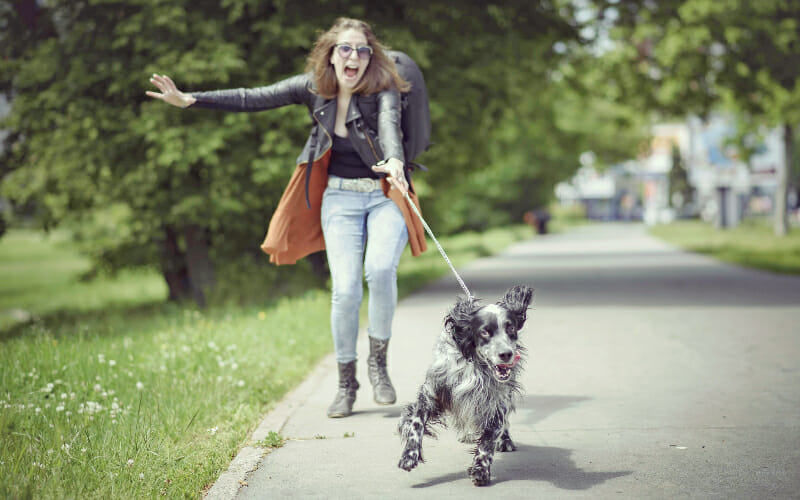
For example a dog that is pulling on the walk:
Your dog is pulling, you are constantly either telling him off or trying to drag/yank him away. Finally he stops but because you are so caught up in the situation you don’t register straight away he has stopped, you have walked 20 – 30 seconds before you realise and say “Oh good boy you stopped pulling” or whatever it is you might say, if you even say anything. In 20-30 seconds, your dog has already moved on from the reason of why he was pulling and is probably looking or sniffing for the next distraction he can get to. However, if the very second he stopped pulling, you made a gigantic fuss of him and you did that every time, he would finally start to understand why he is getting all the fuss and real training can take place. You want your dog to believe that all the good stuff comes from you, not the environment.
So by not praising the dog the second he does the correct behavior, you are setting yourself and your dog up for failure. Why. Because the owner doesn’t understand that the dog hasn’t learnt the desired behavior. After all he, the owner, did praise the dog, so therefore the dog should now know how to behave. However in reality the dog has no idea why he was praised. It may just be that he lost interest in that smell or distraction and moved on. He hasn’t associated the praise that the owner gave because it was given way too late. Conversely the same happens with corrections. A correction that is made even as little as 15 seconds after the dog has exhibited an undesired behaviour will have little to no meaning for your dog. Which is often why dogs can take so long to train.
DOGS LIVE IN THE MOMENT
NOT 20,30,40,50,etc SECONDS PAST THE EVENT.
I cannot emphasize enough how important
TIMING OF PRAISE AND CORRECTION IS.
9. Show good Leadership Skills
Dogs are pack (family) animals. They like to know who is in charge, who is making the decisions and if you don’t do it then your dog will make his own and they are probable not going to be decisions that you like.
10. HOW TO DEAL WITH SEPARATION ANXIETY
Separation anxiety is becoming more and more “A thing” among the canine community.
Why are more dogs suffering from this affliction.
Why are more dogs ending up in rescue kennels and pounds because owners cannot or will not understand what it is that their dog is suffering from.
And more to the point, why are owners so adverse to using methods that work, rather than trying to fix their dog’s problems with treats, more cuddles and more baby talk that they consider, “loving their dogs”.
Using the label “Separation anxiety” in most people/owners causes an emotive response such as sympathy, guilt, wanting to be motherly, becoming overly protective and possibly, the owner developing an over anxious personality from worrying about his dog too much. The same reaction occurs when we label a dog as a “Rescue Dog’ .
As soon as we start labeling our dogs in this way, because of OUR emotions not necessarily the dogs, we now start to create a certain way of dealing with issues that may or may not be associated with separation anxiety And again the same can be said if a dog is continually labeled as being a “Rescue Dog”. People/owners can become overly protective, motherly, sympathetic etc, etc and deal with their dog in a certain way that is not helpful to the dog at all.
Now before I go much further and because I can already hear you saying, But I love my dog, I want my dog to be happy, he’s been through so much, I don’t want him to suffer any more. Just let me say I am not in any way, shape or form telling you not to love your dog. Of course we love our dogs and want only the best for them. Unfortunately though, we push way too many human emotions onto our dogs who frankly, just don’t see the world the way we as humans do. Nor do they have the range of emotions or cognitive ability that we have and we are doing our dogs a HUGE dis-service by treating them as though they can understand our complex, human emotive nature.
So “What do I do?” I hear you asking, and the answer really is quite simple.
TURN DOWN THE LOVE AND TURN UP THE LEADERSHIP.!!!!!
And give the labels a miss.
If you have a puppy these steps need to be instigated as soon as you get him home. Allowing a puppy to jump all over everyone, all over the furniture and to run manically around the house, may be cute when his is a small ball of fluff, however, if your puppy is a medium size dog or larger, this behavior will soon become the bane of your existence and be 10 x harder to curb, so start now. Even if you have a small breed dog. Most people do not enjoy having little dogs constantly jumping up at their ankles, yapping or jumping on their lap when they sit on the couch. If they are invited, that’s a different story.
You need to implement rules, boundaries and discipline.
FINAL WORD ON TRAINING
Repeat Repeat and Repeat.
Considerable repetitions will give your dog ample time to grasp the command. Consistency is the name of the game. After doing enough repetitions, not helping him with the routine will test if the dog really got it. Three successful attempts in a row is a fine gauge in defining if it's just a fluke or if the dog has actually understood the drill.
REPETITION IS THE MOTHER OF SUCCESS

Comments